Ecuador
Cruises to Sullivan Bay
Sullivan Bay is a compact Galapagos stop where black lava, sharp wildlife moments, and serious snorkeling matter more than a long checklist.
Upcoming visits
168
Best fare
$1,885 per night
Sullivan Bay is a compact Galapagos stop where black lava, sharp wildlife moments, and serious snorkeling matter more than a long checklist.
Find Sullivan Bay on Google Maps before you plan the port day.
Sullivan Bay is not trying to be a town stop, a shopping stop, or a soft-focus beach day. Its pull is stranger and more specific: fresh-looking pahoehoe lava from an 1890s eruption, pioneer plants finding a way into the cracks, lava lizards flashing across dark rock, and shore life that rewards anyone willing to slow down. For cruise passengers, that clarity is useful. You are not deciding between ten competing neighborhoods; you are choosing how much of the stop to give to geology, wildlife watching, and the water.
The best Sullivan Bay plan is usually simple: anchor the day with the lava field hike, then decide whether your second priority is snorkeling near Pinnacle Rock or lingering over smaller natural details on shore. This is a port for travelers who like their Galapagos with texture: stark landscapes, evolutionary clues, and animals doing unbothered animal things. It is less suited to anyone chasing cafes, museums, or a lazy resort setup. Come for the rawness, wear the right footwear, and do not rush the weird parts.
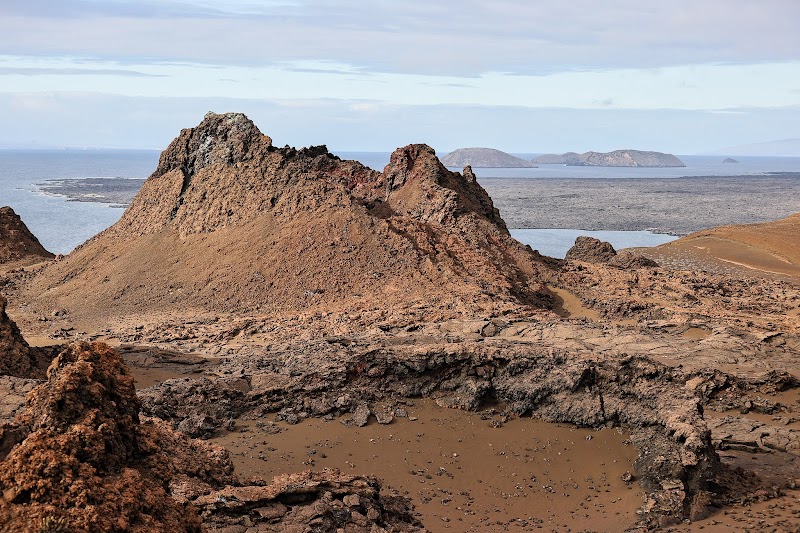
The Sullivan Bay Lava Field Hike is the stop's signature experience for a reason. Walking across pahoehoe lava from an 1890s eruption feels less like a scenic stroll and more like stepping onto a frozen black sea. The surface is sculptural, rippled, and unforgiving, so this is not the place for flimsy footwear. Prioritize it if you want the Galapagos to feel geologic, not just wildlife-focused. It suits curious hikers, photographers who like harsh lines and texture, and anyone who wants a cruise day that could not be mistaken for another island call.
Do the lava field first if conditions and your excursion timing allow; it gives the whole port stop its context.
The Pioneering Plants Trail is the quieter counterpoint to the big lava drama. This is where the landscape starts explaining how life returns to a hostile surface: small plants taking hold, lava lizards using the heat and cover, and a fragile ecosystem that is easy to miss if you are only scanning for headline animals. It is a strong choice for travelers who like natural history in close-up rather than from a viewpoint. If your port stop feels short, pair this with the main lava walk instead of trying to make the day too broad.
Walk pahoehoe lava from 1890s eruption, stark moonscape. Unique geology lesson. Boots required.
Spot first colonizers: lava lizards, pioneer plants. Fragile ecosystem. Educational stroll.
Watch non-flying cormorants fishing. Rare endemic behavior. Bird highlight.
Reef with Galápagos penguins, sea lions, eagle rays. Drift snorkel. Pinnacle underwater.
Current sailings visiting this port, sorted by the lowest tracked cabin price per night.
Built 2019
Baltra · Puerto Egas · Elizabeth Bay · Sullivan Bay · Las Bachas · Puerto Baquerizo Moreno · Puerto Ayora
Built 2019
Baltra · Puerto Egas · Elizabeth Bay · Sullivan Bay · Las Bachas · Puerto Baquerizo Moreno · Puerto Ayora
Built 2019
Baltra · Puerto Egas · Elizabeth Bay · Sullivan Bay · Las Bachas · Puerto Baquerizo Moreno · Puerto Ayora
Built 2019
Baltra · Puerto Egas · Elizabeth Bay · Sullivan Bay · Las Bachas · Puerto Baquerizo Moreno · Puerto Ayora
Built 2019
Baltra · Puerto Egas · Elizabeth Bay · Sullivan Bay · Las Bachas · Puerto Baquerizo Moreno · Puerto Ayora
Built 2019
Baltra · Puerto Egas · Elizabeth Bay · Sullivan Bay · Las Bachas · Puerto Baquerizo Moreno · Puerto Ayora
Built 2019
Baltra · Puerto Egas · Elizabeth Bay · Sullivan Bay · Las Bachas · Puerto Baquerizo Moreno · Puerto Ayora
Built 2019
Baltra · Puerto Egas · Elizabeth Bay · Sullivan Bay · Las Bachas · Puerto Baquerizo Moreno · Puerto Ayora
Built 2019
Baltra · Puerto Egas · Elizabeth Bay · Sullivan Bay · Las Bachas · Puerto Baquerizo Moreno · Puerto Ayora
Built 2019
Baltra · Puerto Egas · Elizabeth Bay · Sullivan Bay · Las Bachas · Puerto Baquerizo Moreno · Puerto Ayora
Built 2019
Baltra · Puerto Egas · Elizabeth Bay · Sullivan Bay · Las Bachas · Puerto Baquerizo Moreno · Puerto Ayora
Built 2019
Baltra · Puerto Egas · Elizabeth Bay · Sullivan Bay · Las Bachas · Puerto Baquerizo Moreno · Puerto Ayora
Travelers who enjoy small details, natural history, and the first signs of life on a young volcanic landscape.
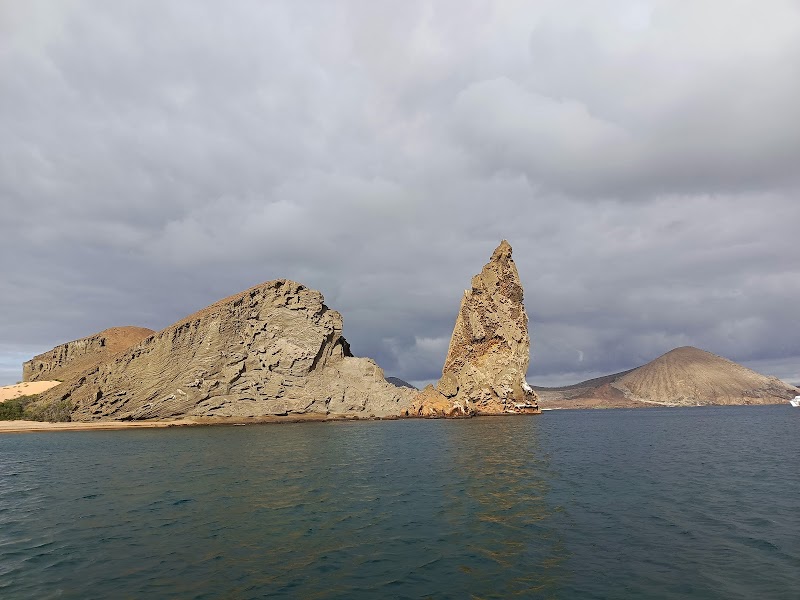
Snorkeling near Pinnacle Rock is the stop's strongest water-based option, especially if you came to the Galapagos for marine encounters. The draw here is not just clear water; it is the chance of seeing Galapagos penguins, sea lions, eagle rays, and reef life in a setting shaped by the pinnacle below the surface. Because it is described as a drift snorkel, it is best for confident swimmers who are comfortable moving with the water rather than floating in one protected patch. If snorkeling is your thing, this can rival the lava walk for top billing.
You would rather remember the day as a marine encounter than a land walk, and you are comfortable with a drift snorkel.
The Marine Life Shore Pools are the kind of stop that can look minor on paper and then quietly steal your attention. At low tide, the pools hold anemones, small fish, and the sort of macro life that rewards patience more than distance covered. This is not a substitute for snorkeling if you want bigger marine animals, but it is a smart add-on for travelers who like kneeling down, watching movement, and noticing patterns in a small pocket of water. It also works well when you want a gentler shore-based moment between more active parts of the day.
Do not rush the tide pools; the point is to let your eyes adjust and watch the small stuff start moving.
Sally Lightfoot crabs give Sullivan Bay its easiest hit of color. Against the dark volcanic rock, their movement is almost impossible not to watch: quick, bright, and constantly negotiating the waves. They are not an activity in the formal sense, but they are exactly the kind of detail that makes a Galapagos landing feel alive between the bigger planned stops. This is a good reminder not to treat transit time as dead time. For photographers and restless observers, the rocks can be as entertaining as the named trail.
Dark lava and bright crabs make a strong visual pairing, but patience beats chasing them around the rocks.
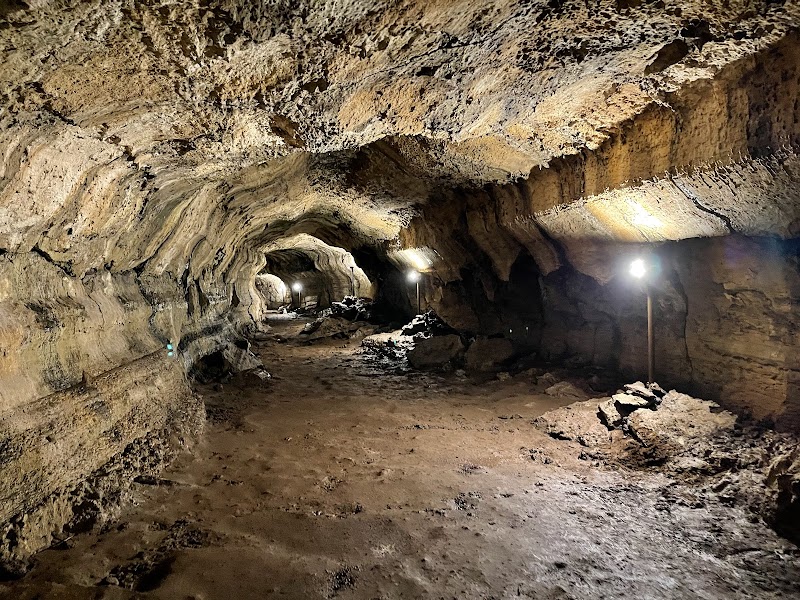
Lava Tube Exploration adds a different texture to the volcanic story: enclosed, shadowy, and more atmospheric than panoramic. The short tube has skylights and strange acoustics, and a torch is needed, which already tells you it is not the casual default for every passenger. Treat it as a bonus layer if you are especially interested in volcanic formations or if your itinerary gives you time beyond the core lava walk and shoreline watching. It is less essential than the main field, but for geology-minded travelers it can make the landscape feel three-dimensional.
Geology fans who want more than the surface view and do not mind a darker, more enclosed stop.
Tide pools with anemones, fish. Macro critters. Low-tide gems.
Colorful crabs skittering on rocks. Wave-chasing spectacle. Beach entertainment.
Oystercatchers on shore rocks. Shorebirds galore. Quiet observation.
Short tube with skylights, eerie acoustics. Torch needed. Volcanic relic.