
Prins Christian Sund is not a typical cruise call where you step off, find coffee, and build a checklist around museums or beach time. The point here is the transit itself: a narrow Greenland sound where the ship moves between ice, rock, water, and tiny signs of human life. If you are weighing an itinerary that includes it, think of this as a scenic cruising day with unusually high visual payoff. You book it for the open decks, the cold air, and the strange feeling of watching a landscape that makes the ship feel small.
The best plan is almost aggressively simple: dress warm, keep your camera ready, and do not disappear indoors for too long. The scenery changes by the minute, from blue ice drifting past the hull to glaciers spilling toward the sea and dark cliffs rising straight out of the water. Wildlife is possible, not guaranteed, so treat seals or whales as a bonus rather than the whole reason to go. Prins Christian Sund fits photographers, landscape obsessives, geology nerds, and anyone who would rather stare at an Arctic passage than rush through another crowded port town.

Let Iceberg Alley set the tone
Iceberg Alley is the image most passengers will remember: blue-white ice drifting through the channel in shapes that look designed but are entirely natural. For a cruise traveler, this is the moment to be outside rather than watching through glass. The smaller growlers are as compelling as the bigger bergs, especially when the color shifts from chalky white to electric blue. Prioritize this if you care about photography or simply want the clearest visual proof that you are somewhere far from routine cruise geography.
Photographers, first-time Arctic cruisers, and anyone who wants the defining deck-view moment.

Watch the glaciers, but do not expect them on cue
The calving glaciers are the sound's most dramatic reminder that this landscape is moving, not static. Glaciers pour down from the ice sheet toward the ocean, and when ice breaks away, the scale is hard to process from the deck. That said, calving is not a scheduled performance. The smarter approach is to linger outside when the ship is near glacier faces and listen as much as you look. This is a strong priority for travelers drawn to raw natural power rather than tidy viewpoints.
Stay patient. The best glacier moment may happen while everyone else is at lunch.
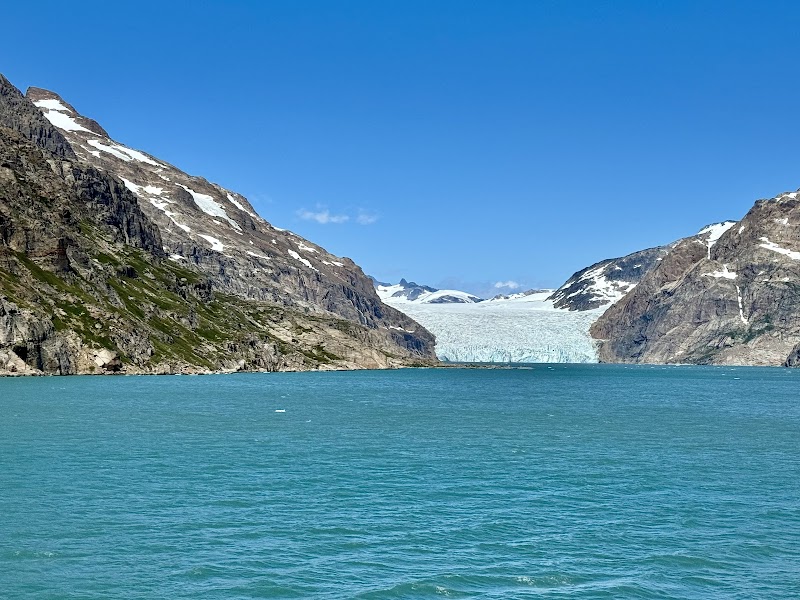
Use the granite cliffs for scale
The granite cliffs are what make Prins Christian Sund feel less like open scenic cruising and more like entering a stone corridor. Sheer walls rise from the cold water, turning the ship into the measurement tool. They are especially good for travelers who like landscapes with structure: vertical lines, tight passages, dark rock, and sudden perspective shifts. If icebergs are the spectacle, the cliffs are the architecture. Do not treat them as background; they are the reason the route feels so narrow, immense, and slightly unreal.
Frame the cliffs with a bit of ship rail or waterline to show their scale.
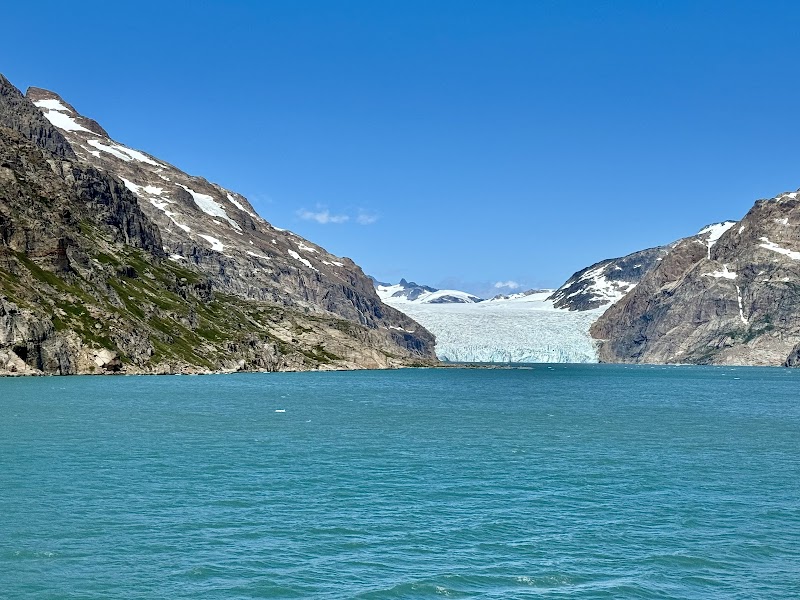
Look for the waterfalls in summer melt
The waterfalls are easy to underestimate until you start noticing how many threads of meltwater are running down the cliffs. They read like thin silver lines against dark rock, adding movement to a landscape that can otherwise feel frozen in place. For cruise passengers, they are a reason to keep scanning both sides of the sound instead of focusing only on the ice ahead. This is a quieter pleasure than glacier calving, but it gives the passage texture, sound, and a sense of seasonal change.
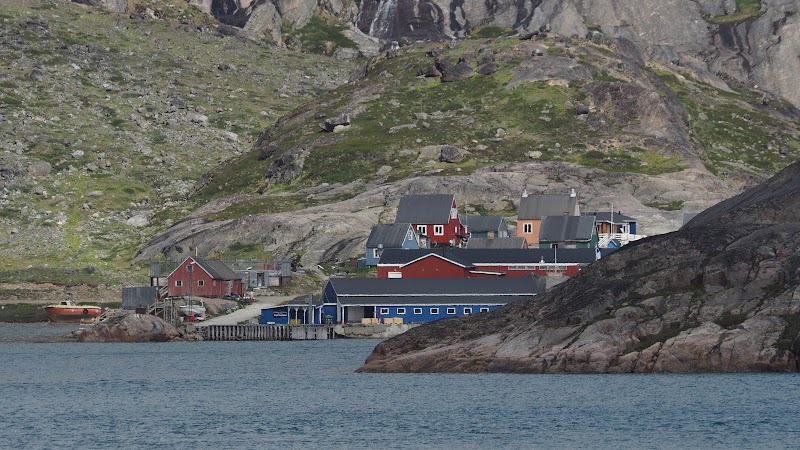
Watch Aappilattoq from the water with respect
Aappilattoq Village is one of the few human-scale moments in the sound, and that contrast is what makes it memorable. Colorful houses sit below jagged peaks in a settlement of roughly 100 residents, tied to hunting and fishing in a place that feels profoundly remote from the ship. For passengers, the value is not in consuming it as a cute photo stop. It is in seeing how small and deliberate human presence looks in this environment. Prioritize the view, but keep the tone observant and respectful.
Aappilattoq turns the landscape from abstract wilderness into a lived-in Arctic place.

Keep one eye on the water for wildlife
Marine wildlife spotting in Prins Christian Sund rewards attention more than itinerary planning. The cold currents can bring seals and whales, including humpback and fin whales, into the broader scene, but sightings are never something to bank the day on. The best strategy is low-effort vigilance: scan the water between iceberg viewing, watch for movement near the surface, and listen if other passengers start pointing. This is ideal for patient travelers who like nature unscripted. If nothing appears, the setting still carries the day.
Wildlife is a bonus here, not the baseline experience.
Things to do in Prins Christian Sund
Aappilattoq Village
This tiny, remote settlement of colorful houses sits dramatically at the base of soaring jagged peaks along the sound. Home to around 100 residents, it offers a rare glimpse into a traditional Greenlandic hunting and fishing community. Seeing the isolated village from the water underscores how humans adapt to life in the extreme Arctic.
Iceberg Alley
As ships navigate the sound, they sail through a magnificent corridor of floating icebergs and smaller growlers. These natural sculptures come in countless shapes and shades of deep, electric blue, having drifted from nearby glaciers. Watching these frozen giants float silently past the ship is a defining highlight of the journey.
Calving Glaciers
The dramatic sound is filled with several majestic glaciers that spill directly from the ice sheet into the ocean. Cruise passengers can watch in awe as massive blocks of blue ice break off and plunge into the water. The sheer scale and raw power of these frozen giants are best viewed from the open decks.
Marine Wildlife Spotting
The cold, nutrient-rich currents of the sound attract a variety of marine life, including seals and several whale species. Passengers who keep a watchful eye on the water may spot humpback or fin whales surfacing amidst the ice. It is a spectacular natural encounter that brings the silent Arctic landscape to life.
Cascading Waterfalls
During the summer melting season, hundreds of thin waterfalls cascade down the dark, vertical cliff faces. These silver ribbons of glacial runoff create a beautiful contrast against the ancient, rugged rock. The sound of rushing water echoing through the narrow passage adds to the sensory experience of the cruise.
Dramatic Granite Cliffs
Towering sheer granite walls rise up to two thousand meters straight out of the chilly waters of the sound. These massive rock faces create a narrow, cathedral-like passage for ships navigating the channel. The dramatic scale of these geologic formations makes for unforgettable sightseeing and photography.
Prince Christian Sund Weather Station
Situated near the eastern entrance of the sound, this isolated outpost stands as one of the few signs of human infrastructure. Originally established by the United States during World War II, it now operates mostly automatically to monitor regional weather. Viewing this lonely facility from the deck illustrates the extreme isolation of Greenland's outer coast.
Kangerluk Fjord Branch
This peaceful, lesser-known branch of the sound features exceptionally calm, mirror-like waters. The silence here is profound, broken only by the occasional crack of distant ice. The perfect reflections of towering peaks in the still sea offer a mesmerizing and tranquil experience for onboard observers.
Cruise port FAQs
- Is Prins Christian Sund a normal shore excursion port?
- No. For most cruise passengers, the experience is scenic cruising through the sound rather than a conventional day ashore. The major sights are viewed from the ship.
- What are the main things to see in Prins Christian Sund?
- The highlights are icebergs, calving glaciers, steep granite cliffs, summer waterfalls, possible marine wildlife, and the remote village of Aappilattoq.
- Can you see wildlife in Prins Christian Sund?
- It is possible to see seals and whales, including humpback or fin whales, but sightings are not guaranteed. Keep watching the water and treat wildlife as a bonus.
- Where is the best place to experience the passage?
- Open decks are best because the scenery changes on both sides of the ship. Dress for cold conditions so you can stay outside comfortably.
- Who should book an itinerary that visits Prins Christian Sund?
- It is best for travelers who value remote scenery, ice, geology, photography, and slow observation more than shopping, dining, or a busy shore schedule.