CL
Cruises to Easter Island
Easter Island is a port for travelers who want archaeology, big Pacific edges, and a day that feels genuinely far from the usual cruise loop.
Upcoming visits
5
Best fare
$431 per night
Easter Island is a port for travelers who want archaeology, big Pacific edges, and a day that feels genuinely far from the usual cruise loop.
Find Easter Island on Google Maps before you plan the port day.
Easter Island, or Rapa Nui, is not a casual filler stop. The appeal is specific: moai standing against open sky, volcanic terrain, ceremonial sites, and a sense that the island's history is still physically present in the landscape. For cruise passengers, the trick is focus. A short call can feel thin if you try to sample every ahu and quarry, but it can feel extraordinary if you choose a tight route built around the strongest sites.
The best day here is not about checking off statues as if they are interchangeable. Ahu Tongariki gives you the grand, cinematic line of moai. Rano Raraku shows the making of them. Orongo shifts the story toward the birdman tradition and the crater rim. Add one smaller site if your pace allows, but let the major stops breathe. Rapa Nui rewards attention more than speed, especially if this is the once-in-a-lifetime port on your itinerary.
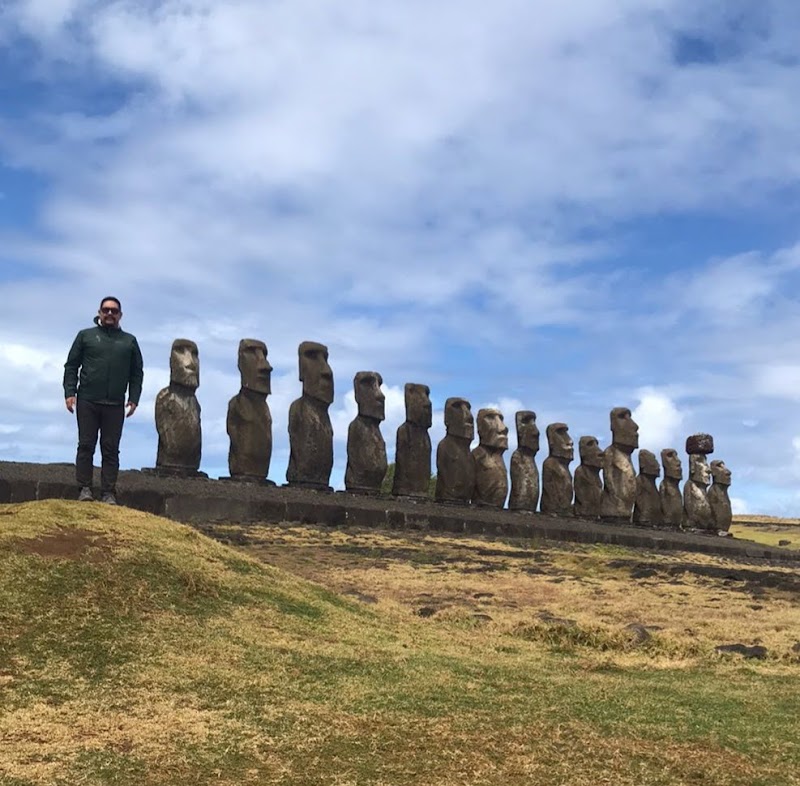
Ahu Tongariki is the image many travelers have in mind before they ever reach Rapa Nui: fifteen restored moai aligned on a platform with the ocean behind them. It is the largest ahu, and it delivers the cleanest visual payoff of the day. If your port stop allows only one major moai site, this is the one to fight for. It suits first-time visitors, photographers, and anyone who wants the island's scale to land immediately rather than gradually.
If you only have time for one moai site, make it Ahu Tongariki.
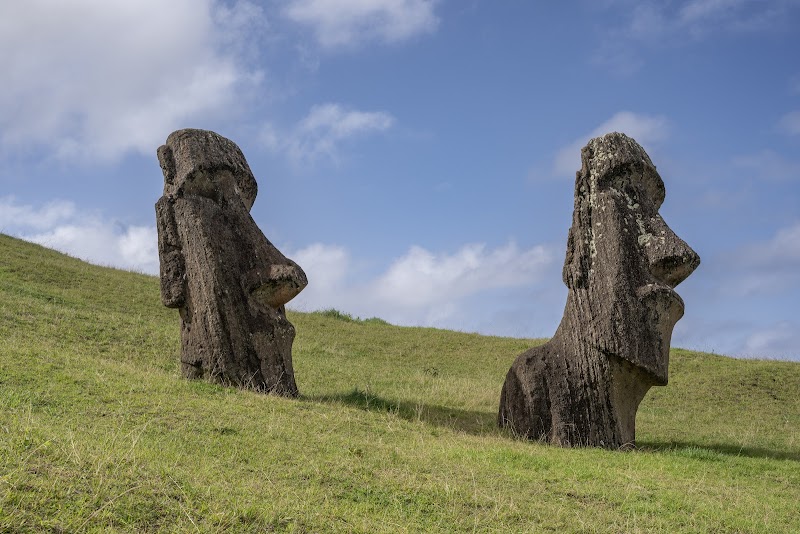
Rano Raraku Quarry changes the moai from objects to process. This was the workshop, with half-carved figures in volcanic tuff and statues that make the landscape feel paused mid-creation. It is essential if you want more than the postcard version of Easter Island. Pairing Rano Raraku with Ahu Tongariki gives a cruise day a strong narrative: where the moai were made, then where they stand in their most dramatic restored formation. History-minded travelers should put this near the top.
Rano Raraku plus Ahu Tongariki is the strongest two-stop moai plan.
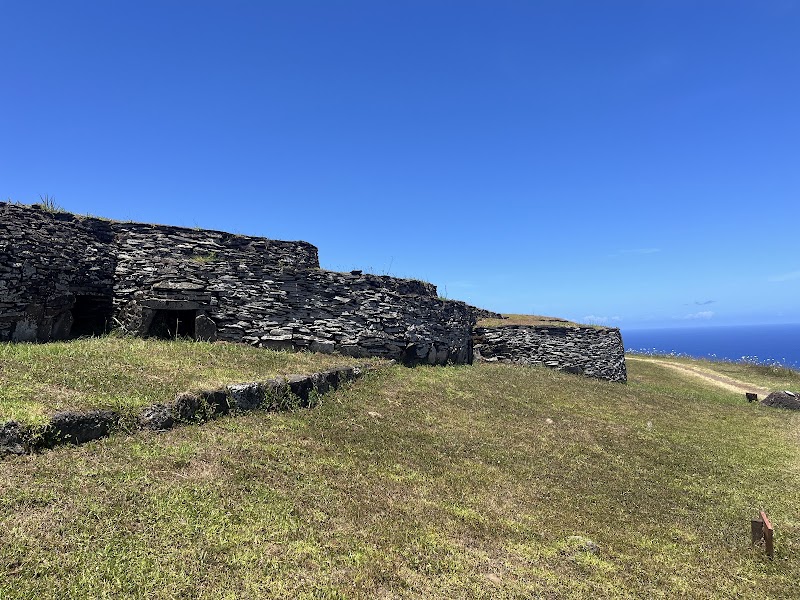
Orongo Ceremonial Village pulls the day away from the familiar moai circuit and onto the rim of Rano Kau crater. The site is tied to the birdman tradition, with petroglyphs and crater-edge views that give the landscape a sharper, more volcanic mood. It is a smart choice for travelers who want cultural context beyond the statues, or for anyone who prefers viewpoints with a story attached. If your itinerary already includes major ahu stops, Orongo adds contrast instead of repetition.
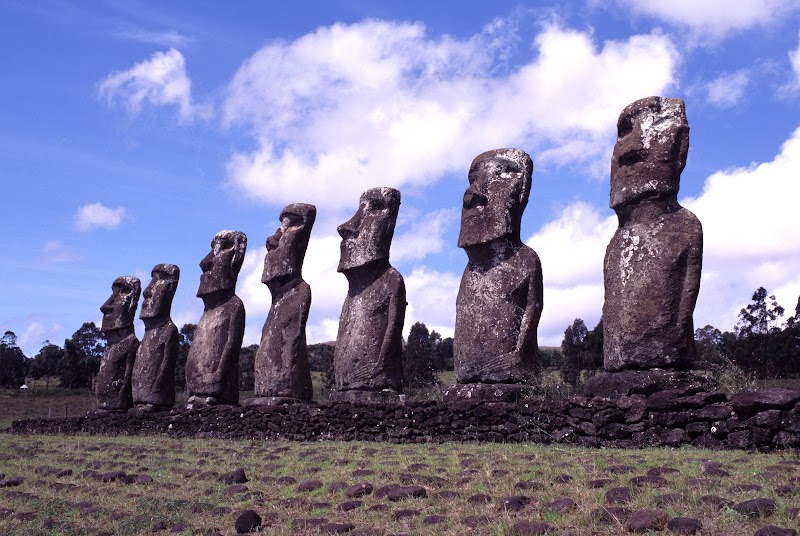
Ahu Akivi is memorable because it does not feel like a coastal repeat. Its seven moai face the sea from an inland setting, and the site is associated with astronomical alignment. That makes it a strong second-wave stop after the biggest icons, especially for travelers who like places that raise questions rather than simply deliver scale. It is not the obvious first choice over Tongariki or Rano Raraku, but it rounds out the day with a quieter, more enigmatic version of the island's archaeology.
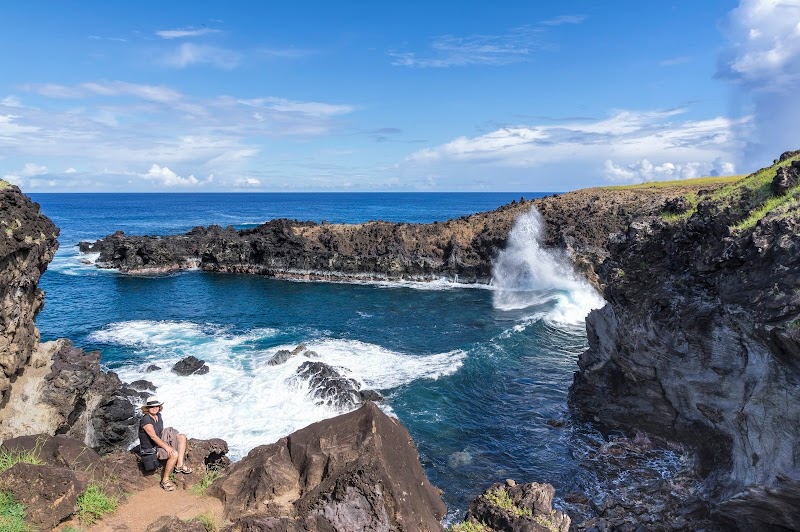
Ana Kai Tangata Cave is the palate cleanser: a sea cave with birdman paintings and an opening toward the water. After several open-air moai sites, the change in texture matters. It is cooler, more enclosed, and more about details than monumentality. This fits travelers who want a compact stop with art and atmosphere, or anyone building a route that balances archaeology with coastal scenery. Treat it as an add-on, not the anchor, unless caves and rock art are your main interest.
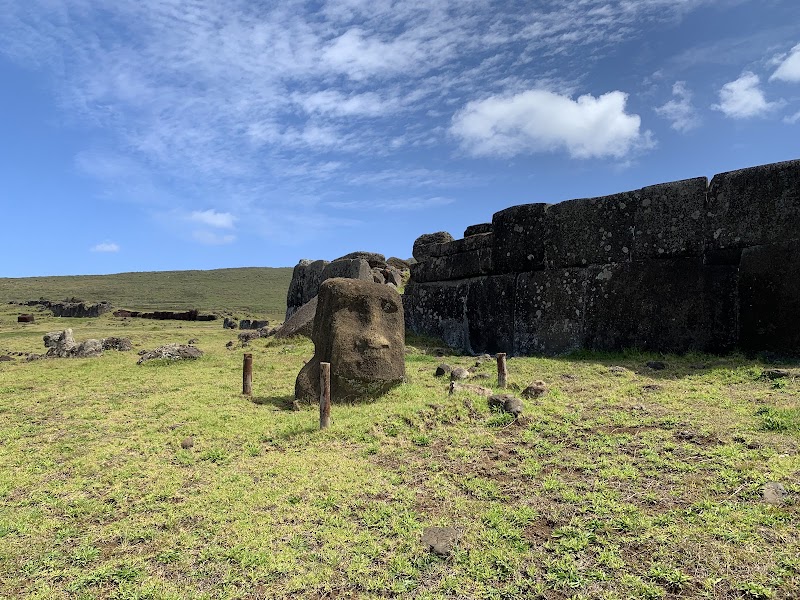
Ahu Vinapu is less about a clean heroic lineup and more about stonework, toppled moai, and historical questions. Its walls are often described as Inca-like, which gives the site a distinct visual language from the island's more famous platforms. For a cruise passenger, it works best if you have already seen a restored ahu and want to compare forms rather than repeat the same view. It suits curious travelers who enjoy unresolved history and do not need every stop to be immaculate.
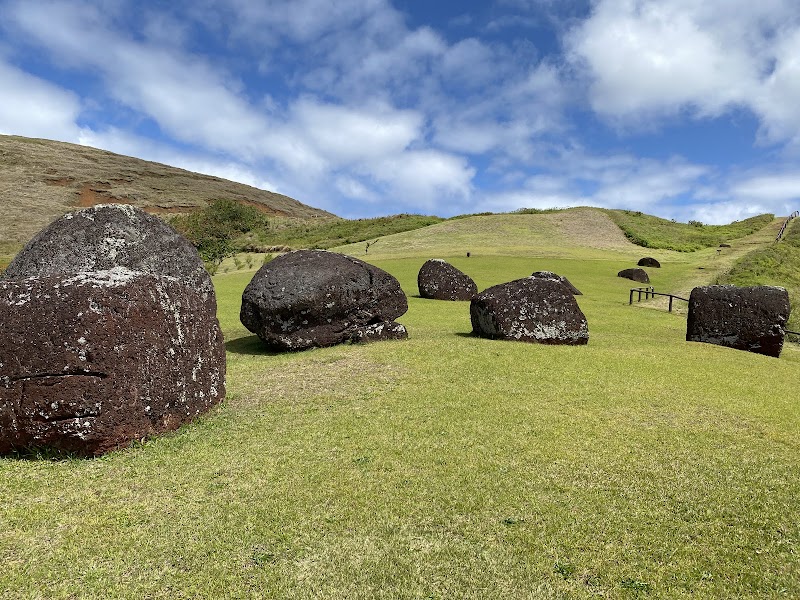
Puna Pau Quarry is smaller in scale but useful if you are trying to understand the full moai silhouette. This red scoria quarry is tied to the pukao, the topknots or hats seen on some moai. It is not the first stop to choose if your day is tight, because the emotional hit is subtler than Tongariki or Rano Raraku. But for travelers who like material culture and making-of details, it adds a satisfying layer to the island's engineering story.
15 restored moai on platform, ocean backdrop. Sunrise epic. Largest ahu.
7 moai facing sea, astronomical alignment. Inland mystery. Iconic inland site.
Moai workshop with half-carved statues in tuff. Walk among giants. Essential moai site.
Sea cave with birdman paintings, swim opening. Cool retreat. Artistic cavern.
Current sailings visiting this port, sorted by the lowest tracked cabin price per night.
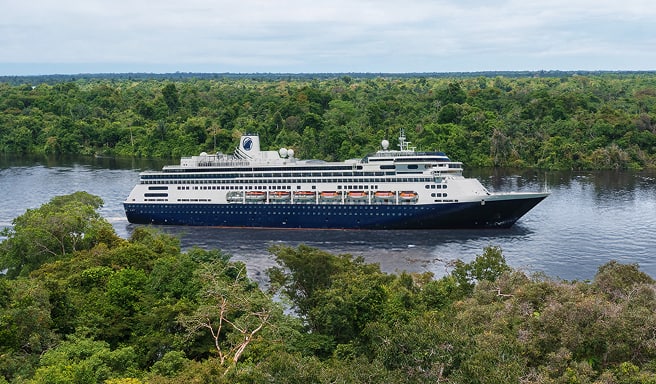
Built 1999
Fort Lauderdale · Panama Canal · Manta · Lima · Easter Island · Tahiti · Moorea · Bora Bora · Apia · Savusavu · Fiji · Lifou · Nouméa · Sydney · Airlie Beach · Townsville · Darwin · Bali · Surabaya · Semarang · Singapore · Kuala Lumpur · Penang · Phuket · Hambantota · Colombo · Malé · Port Louis · Réunion (Le Port) · Port Elizabeth · Cape Town · Lüderitz · Walvis Bay · Jamestown · Banjul · Dakar · Praia · Mindelo · Tenerife · Gran Canaria · Lanzarote · Casablanca · Lisbon · Porto · Bilbao · Bordeaux · Cherbourg · Rotterdam · Oslo · Copenhagen · Aarhus · Dover · San Juan
Built 1999
Fort Lauderdale · Panama Canal · Manta · Lima · Easter Island · Tahiti · Moorea · Bora Bora · Apia · Savusavu · Fiji · Lifou · Nouméa · Sydney
Built 1999
Fort Lauderdale · Barbados · Devil's Island · Icoaraci · Recife · Rio · Montevideo · Buenos Aires · Port Stanley · Drake Passage · Ushuaia · Beagle Channel · Punta Arenas · Strait of Magellan · Puerto Montt · San Antonio · Easter Island · Moorea · Tahiti · Bora Bora · Auckland · Tauranga · Wellington · Christchurch · Picton · New Plymouth · Sydney · Brisbane · Townsville · Cairns · Darwin · Slawi Bay · Bali · Singapore · Phuket · Colombo · Malé · Port Louis · Réunion (Le Port) · Port Elizabeth · Cape Town · Lüderitz · Walvis Bay · Takoradi · Abidjan · Praia · Mindelo · San Juan
Built 1999
Fort Lauderdale · Barbados · Devil's Island · Icoaraci · Recife · Rio · Montevideo · Buenos Aires · Port Stanley · Drake Passage · Ushuaia · Beagle Channel · Punta Arenas · Strait of Magellan · Puerto Montt · San Antonio · Easter Island · Moorea · Tahiti · Bora Bora · Auckland · Tauranga · Wellington · Christchurch · Picton · New Plymouth · Sydney
Built 1999
San Antonio · Easter Island · Moorea · Tahiti · Bora Bora · Auckland · Tauranga · Wellington · Christchurch · Picton · New Plymouth · Sydney · Brisbane · Townsville · Cairns · Darwin · Slawi Bay · Bali · Singapore
Birdman cult site on Rano Kau crater rim. Petroglyphs, views. Volcanic marvel.
Inca-like stone walls, toppled moai. Puzzle history. Sturdy enigma.
Red scoria hat source, moai pukao. Smaller scale. Puka insight.