NZ
Cruises to Doubtful Sound
Doubtful Sound is for travelers who want scale, silence, and weatherproof drama more than a conventional port day.
Upcoming visits
1
Best fare
$312 per night
Doubtful Sound is for travelers who want scale, silence, and weatherproof drama more than a conventional port day.
Find Doubtful Sound on Google Maps before you plan the port day.
Doubtful Sound is not a port that behaves like a city stop. The point is the fiord itself: deep, dark water pushed between sheer peaks, waterfalls dropping through forest, and a hush that feels almost engineered. It is often framed as the quieter, more remote alternative to Milford Sound, and that difference matters. If your ideal cruise day involves shopping streets and a dozen easy detours, this is not that. If you want New Zealand to look wild, vertical, and slightly intimidating, Doubtful Sound earns its place on an itinerary.
The best way to approach the stop is to stop thinking in terms of attractions stacked back to back. Doubtful Sound works as one layered landscape: water, lookout, rainforest, wildlife, and maybe an engineering detour if your excursion includes it. Prioritize the experience that gets you deepest into the fiord, then use viewpoints or transfers as part of the story rather than filler. This is a strong call for photographers, nature-first travelers, and anyone who prefers a quiet deck rail to a crowded landmark queue.
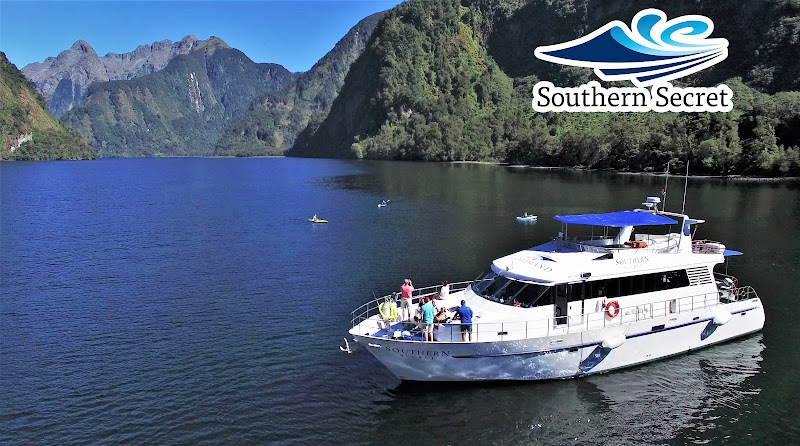
The Doubtful Sound Scenic Cruise is the reason to care about this port. It puts you directly on the dark water, close to the scale of the fiord rather than just admiring it from a distance. Expect a stripped-back kind of drama: steep peaks, waterfalls, forested walls, and the possibility of fur seals or dolphins without the feel of a busy sightseeing circuit. For most cruise passengers, this should outrank any secondary add-on. It fits travelers who want immersion over variety, especially if the broader itinerary has leaned toward towns and harbors.
Choose the option that spends the most meaningful time on the water.
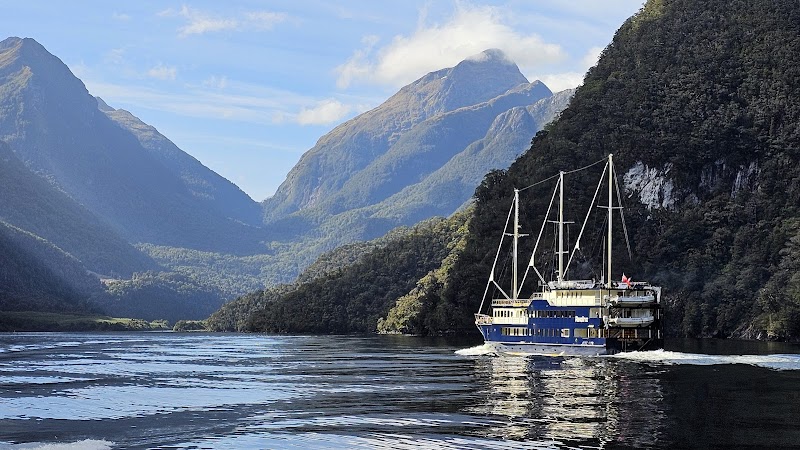
Deep Cove is more than a starting point for aquatic tours; it is where the fiord's size becomes easier to read. From the wharf and nearby lookout points, the water, slopes, and sky line up in a way that gives your photos context. It is a good stop for travelers who do not need constant motion and are happy to let a view sit for a minute. If your day includes time here, do not treat it as dead space before the boat. This is where you calibrate your eyes to the scale of Fiordland.
Navigate the deep, dark waters of the 'Sound of Silence' to witness towering peaks, cascading waterfalls, and resident wildlife like fur seals and dolphins. This immersive cruise offers a much quieter, more remote experience compared to Milford Sound. The dramatic, untouched wilderness is a highlight of any New Zealand voyage.
Begin your Doubtful Sound journey at Deep Cove, the main access point for the region's aquatic tours. The scenic views from the wharf and nearby lookouts provide an excellent vantage point to appreciate the fiord's massive scale. It's a serene spot to take photos and breathe in the pristine Fiordland air.
Travel over the Wilmot Pass by coach, offering spectacular views over Doubtful Sound and the dense temperate rainforest below. This road was originally constructed to support the Manapouri Power Station project. It remains one of the most remote and scenic high-altitude roads in New Zealand.
Current sailings visiting this port, sorted by the lowest tracked cabin price per night.
Wide shots work better here than close-ups; let the fiord fill the frame.
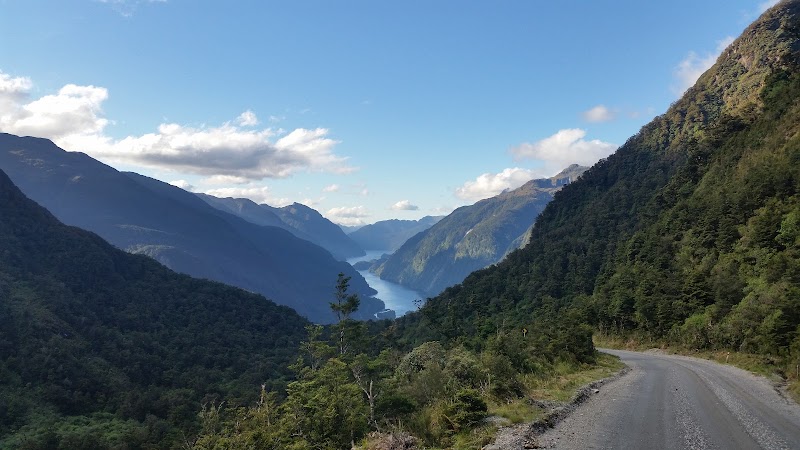
Wilmot Pass is the rare transfer that feels like part of the destination. The road crosses high, remote terrain and opens onto views of Doubtful Sound and the dense temperate rainforest below. It was originally built for the Manapouri Power Station project, which gives the route a practical backstory instead of making it feel like a scenic road for scenic road's sake. This is a strong fit for travelers who like context with their views. If your excursion includes a coach crossing, stay awake for it; the payoff is visual, not just logistical.
The road over Wilmot Pass is part of the experience, not just a connection.
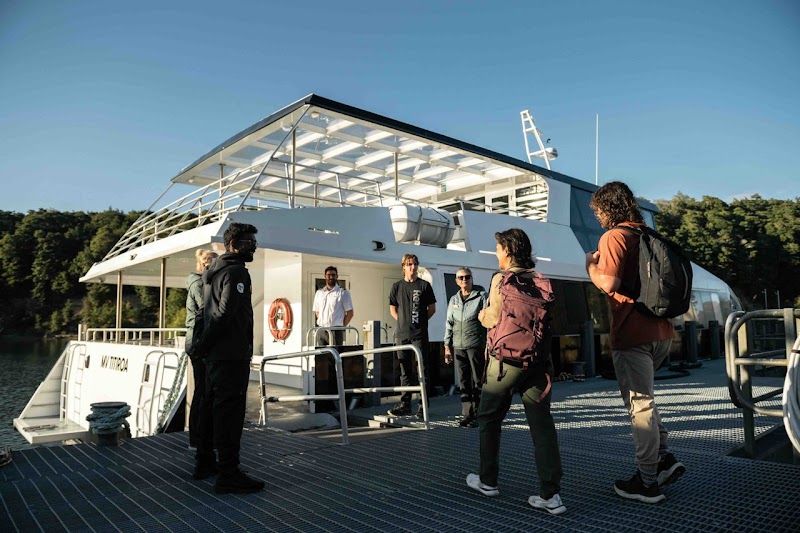
For many journeys into Doubtful Sound, Lake Manapouri is the elegant prelude: deep blue water, small islands, and the Cathedral Mountains framing the crossing. It has a different mood from the fiord, less enclosed and more open, which makes the eventual arrival into Doubtful Sound feel even more dramatic. Cruise passengers should think of it as a bonus landscape rather than a competing attraction. It suits travelers who enjoy the rhythm of the journey as much as the headline stop, especially photographers looking for a softer contrast to the fiord's dark edges.
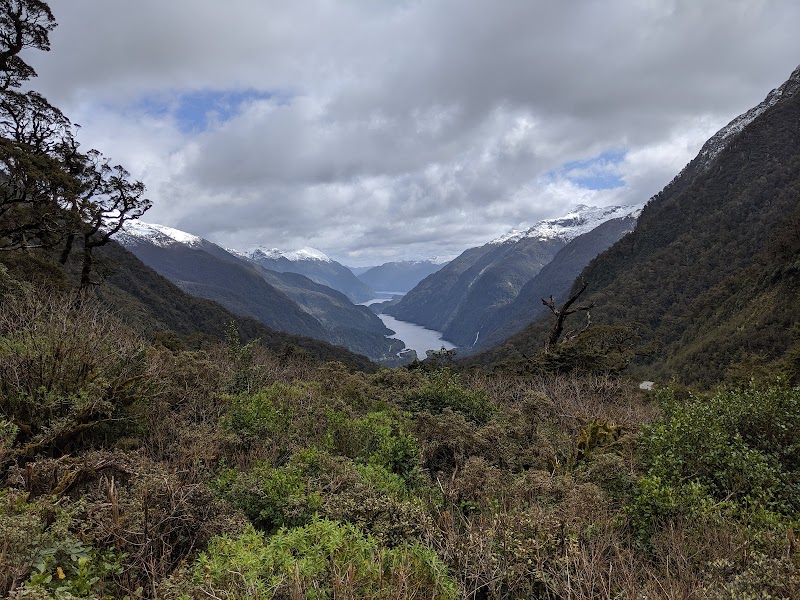
Wildlife is a major part of Doubtful Sound, but it is best treated as a real encounter, not a scheduled performance. Bottlenose dolphins, Fiordland crested penguins, and New Zealand fur seals are all associated with the area, and the calmer waters and kelp forests support a richer marine setting than you may expect at first glance. Because the fiord is less crowded than Milford Sound, sightings can feel less staged when they happen. Bring patience, scan the waterline, and keep a longer lens handy if photography is your priority.
Look often, stay quiet, and let the wildlife be a bonus, not a checklist.
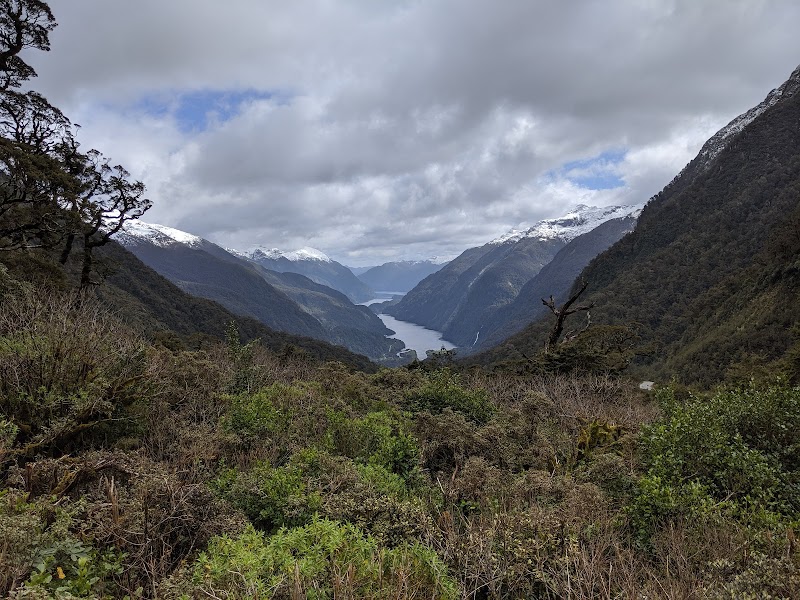
The Cleddau River Valley viewpoints are a useful reminder that Doubtful Sound is not only about water and cliffs. Stops along the Wilmot Pass road bring you closer to the Fiordland rainforest: ferns, mosses, native beech trees, and valley views that drop toward the fiord. This is where detail-oriented travelers get rewarded. Macro photographers can work the textures, while landscape shooters get depth and layers. If you are choosing between a generic photo stop and a rainforest viewpoint, the rainforest is the sharper call; it adds a different scale to the day.
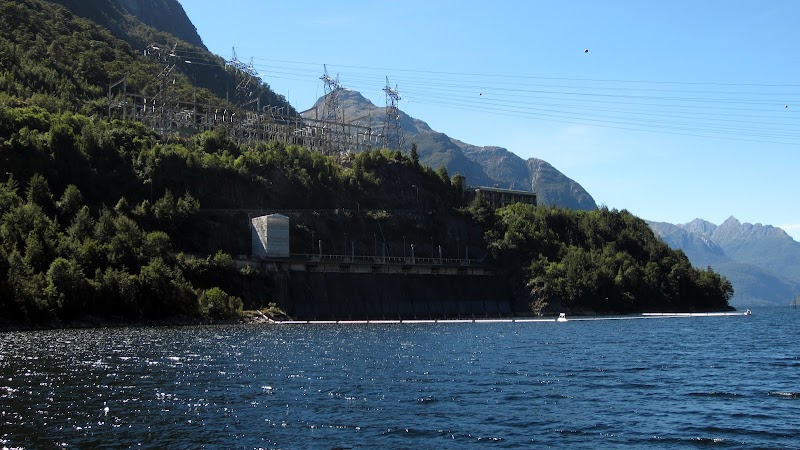
The Manapouri Power Station is the outlier in a Doubtful Sound day, which is exactly why it can work. New Zealand's largest hydroelectric power station is carved deep into a mountain and uses a tunnel system rather than a conventional exterior dam. That contrast between engineered infrastructure and wild surroundings gives the stop a different kind of tension. It is not the first choice for travelers chasing pure scenery, but it is worth considering if you like systems, scale, and the human story behind remote access in Fiordland.
Choose this if engineering interests you; otherwise keep the day focused on the fiord.
As part of the typical journey into Doubtful Sound, passengers must cross the deep blue waters of Lake Manapouri via a scenic cruise. The lake is considered one of New Zealand's most beautiful, dotted with small islands and framed by the imposing Cathedral Mountains.
Keep a keen eye out for Doubtful Sound's unique marine and bird life, including Bottlenose dolphins, Fiordland crested penguins, and New Zealand fur seals. Because the fiord is less crowded than Milford Sound, wildlife encounters are often more natural and undisturbed. Kelp forests in the calm waters attract a diverse array of sea life.
Take a guided tour of New Zealand's largest hydroelectric power station, ingeniously carved deep into a mountain. The station does not have a conventional exterior dam; instead, water is drawn through a massive tunnel system. The engineering marvel is a fascinating contrast to the surrounding natural beauty.
Stop along the Wilmot Pass road to admire the lush ferns, mosses, and native beech trees of the Fiordland rainforest. The viewpoints offer sweeping vistas of the river valley cascading towards the fiord. These stops provide excellent opportunities for macro and landscape photography.
While not strictly within Doubtful Sound, nearby Stevenson's Island offers a short, tranquil nature walk accessible to those chartering smaller tours. It's a fantastic spot to spot native forest birds like the South Island Robin and Kaka. The untouched forest floor is a vivid green carpet of vibrant mosses.