Cruise Planning Tips Highlight Documents, Outlets and Essential Items
Travelers should check passport needs, cabin power arrangements and prohibited-item policies before sailing.
The Cruise Line Industry Association reported nearly 31.7 million passengers in 2023 and described the total as a 7% increase.
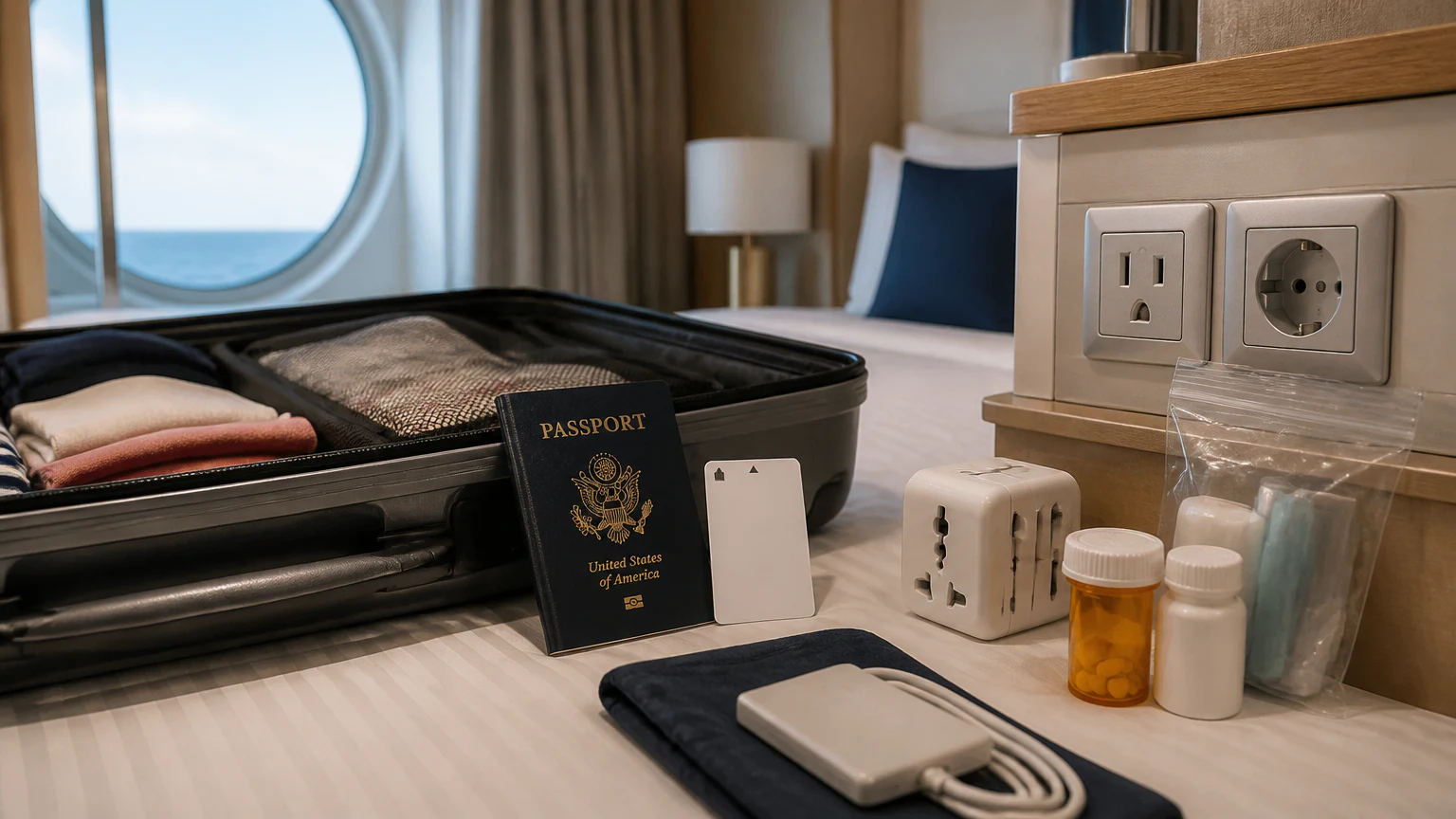
Passport requirements vary by voyage. Some closed-loop sailings that depart from and return to a U.S. port of entry do not require a passport. However, Princess Cruises’ California Coast cruises mostly stop in Canada or Mexico, making passports relevant even when an itinerary is largely within the United States.
Cabin power arrangements can also require preparation. Some cruise lines split outlets between U.S. 110-volt and European 220-volt connections, meaning passengers who do not plan ahead may be unable to use all available outlets. Many cruise lines also prohibit clothes irons and steamers because they classify them as fire hazards.
On embarkation day, checked luggage may take several hours to reach a passenger’s cabin and, in rare cases, can take longer. Passengers are also advised to pack prescription medications because onboard medical facilities may not carry every medication or dosage, or sufficient supplies.
Cruise key cards serve several purposes during a voyage. Passengers use them to enter cabins, board and leave the ship, and pay expenses.